

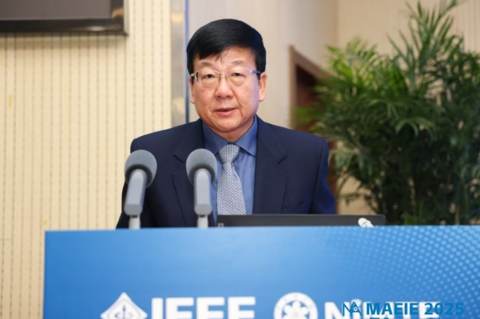

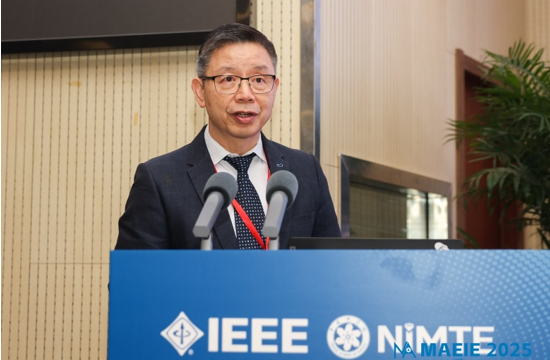
Following the opening ceremony, four renowned experts in the field delivered outstanding keynote reports. Professor Han Huang from Sun Yat-sen University discussed the application of artificial intelligence technologies in advanced manufacturing, focusing on optimizing grinding, milling, and other process parameters through machine learning methods. Professor Bo Tao from Huazhong University of Science and Technology introduced wall-climbing mobile machining robot technology, showcasing innovative applications of a measurement-modeling-machining closed-loop system. Professor Heng Nian from Zhejiang University analyzed the stable operation and optimal control of doubly-fed wind turbines, proposing technical solutions to enhance the grid integration capability of wind power systems. Professor Yisheng Guan from Guangdong University of Technology shared research results on soft robots driven by airbag actuators, analyzing their motion characteristics using a mass-spring model.
Professor Han Huang from Sun Yat-sen University |
Professor Bo Tao from Huazhong University of Science and Technology |
Professor Heng Nian from Zhejiang University |
Professor Yisheng Guan from Guangdong University of Technology |


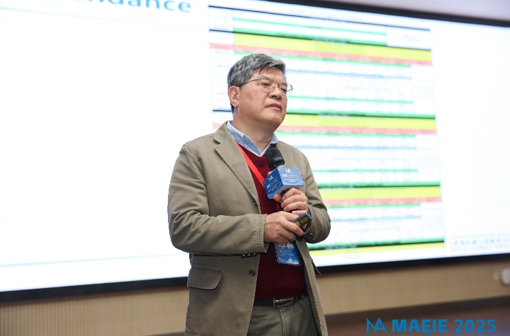
In the afternoon, the conference divided into two parallel forums for in-depth discussions. Forum I focused on intelligent mechanical automation and innovative equipment technologies, where 14 presenters shared the latest research findings on dual-drive feed system error compensation, parallel wall-climbing robot mechanism design, vision-guided force-controlled assembly, and other topics. Forum II centered on electronic information engineering and intelligent sensing technologies, with 14 scholars showcasing innovative applications such as pallet recognition based on YOLOv8, piezoelectric micro-gripper design, and semi-supervised learning for 3D point clouds.
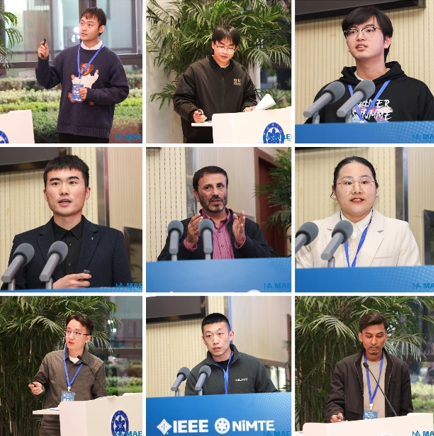
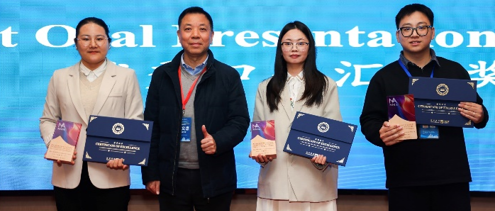
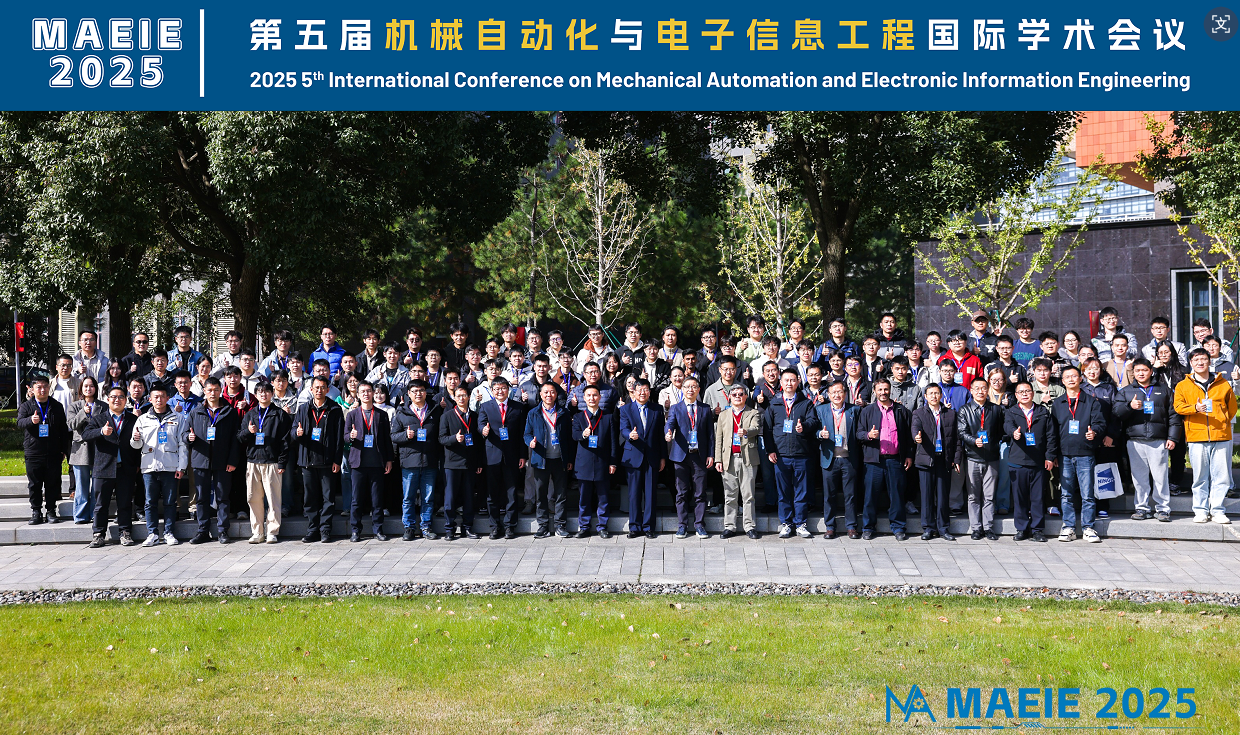
Additionally, the conference featured an awards ceremony and banquet to recognize outstanding papers, oral presentations, and poster displays. A total of 4 keynote speeches and 28 oral presentations were held, along with the exhibition of 22 academic posters, covering cutting-edge topics in mechanical engineering, automation technology, electronic information, intelligent sensing, and other frontier areas.